Counterpoint didn’t begin as a concept. It began as a rapport.
When Chloé Dufresne, Music Director of the Colorado Springs Philharmonic, and Max Shulman, Artistic Director of Theatreworks at UCCS, first started talking, there was no master plan. They were two artists, both new to their roles, talking about the work they love. They discovered an easy rhythm—one shaped by curiosity, humor, and a genuine enjoyment of thinking together. Conversations wandered. Ideas were tested aloud. What kept returning was a shared fascination with storytelling – a shared curiosity: what might happen if those two languages were allowed to stand next to each other—fully themselves—on the same stage?
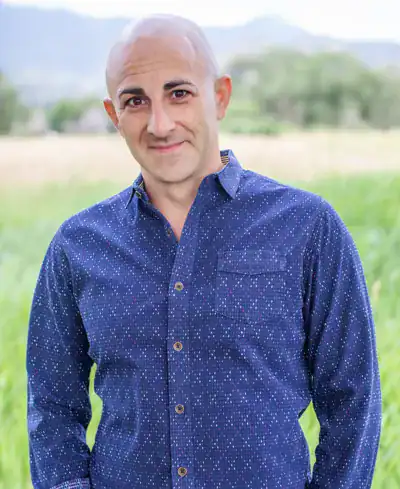
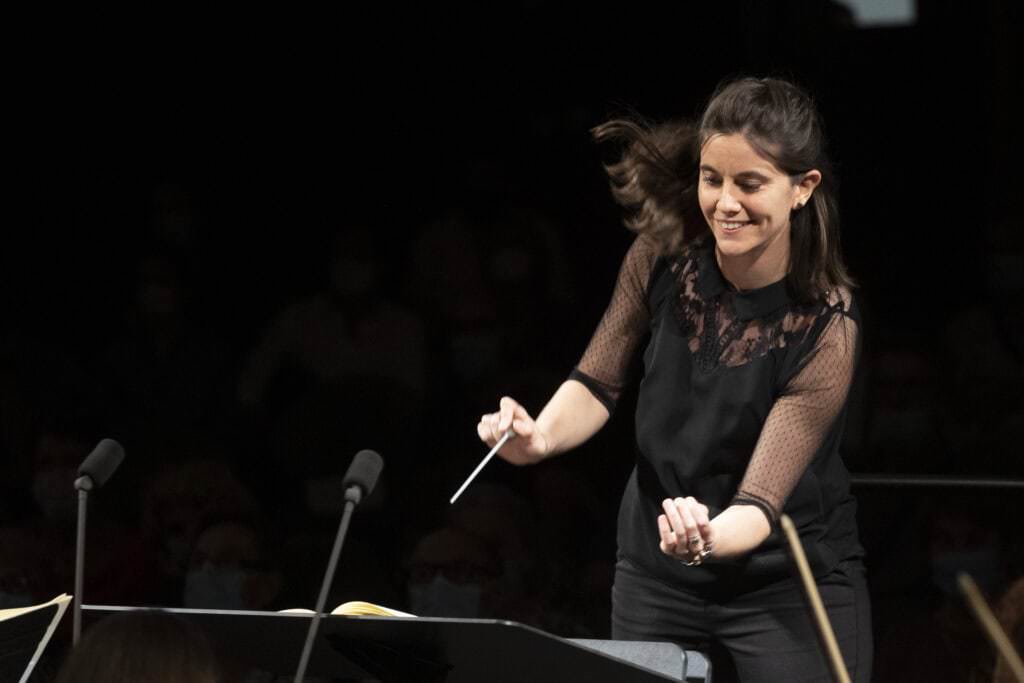
That ongoing conversation became Counterpoint.
Rather than blending disciplines or assigning one to support the other, Counterpoint gives music and text equal footing. Each holds its own line, sometimes aligning, sometimes pushing back, always listening. Like musical counterpoint itself, the interest lies in independence held in balance—the tension, the space, the moments where meaning appears unexpectedly.
Their friendship has quietly shaped the work at every step. There’s comfort in disagreement, freedom to ask, “what if,” and trust in letting ideas unfold without forcing resolution too soon. Across rehearsal rooms, video calls, and long conversations bridging Paris and Colorado Springs, the collaboration has grown organically—less designed than discovered.
For Chloé, orchestral music has always been deeply narrative. Even without words, it carries character, memory, and emotional arc. For Max, theatre is about invitation—creating room for audiences to reflect, connect, and see themselves in a story. Counterpoint lives at that intersection, where neither form leads and neither follows, and where audiences are trusted to make meaning for themselves.
As the Colorado Springs Philharmonic approaches its centennial, Counterpoint feels especially timely. It looks forward with intention, asking how tradition stays alive—not by standing still, but by listening, partnering, and taking thoughtful risks.
At its heart, Counterpoint is about relationship: between two friends, between two art forms, and between the stage and the audience. It reminds us that some of the most compelling new ideas don’t begin with a grand plan. They begin with conversation—and the willingness to listen closely to what emerges.

Appalachian Spring – 10/17 at 7:30pm and 10/18 at 2:30pm
Anchored by Appalachian Spring by Aaron Copland, this program journeys across a growing nation—coast to coast, city to frontier. Music by towering American voices such as John Adams and Steve Reich is set alongside words that capture the American experience in all its complexity. Texts by writers including Norman Maclean, John Williams, August Wilson, and Zitkala-Sa reflect stories of arrival and displacement, labor and landscape, memory and belonging. Together, they offer a portrait of a nation still becoming itself.
Tuesdays in Paris – 1/16 at 7:30pm and 1/17 at 2:30pm
Step into La Belle Époque—a Parisian evening alive with ideas, art, and the hum of shared inspiration. This program imagines a salon where music and poetry mingle freely, where composers and writers speak across disciplines and generations. Works by Claude Debussy, Igor Stravinsky, Francis Poulenc, Maurice Ravel, and Pauline Viardot unfold alongside the words of poets Stéphane Mallarmé, Charles Baudelaire, Paul Verlaine, and Arthur Rimbaud. It is an intimate, electric exchange—art created not in isolation, but in community.
The Invention of Love – 4/3 at 7:30pm and 4/4 at 2:30pm
What is love, and how do we learn it? This final program turns inward, tracing love’s many shapes—its awakenings and losses, its tenderness and ache. Music by Pyotr Ilyich Tchaikovsky, Clara Schumann, and Robert Schumann is paired with spoken texts that explore love from mythic origins to modern heartbreak. Actors give voice to poems and stories that remind us how deeply love defines the human experience—and how often art teaches us to feel it anew.
Anchored by Appalachian Spring by Aaron Copland, this program journeys across a growing nation—coast to coast, city to frontier. Music by towering American voices such as John Adams and Steve Reich is set alongside words that capture the American experience in all its complexity. Texts by writers including Norman Maclean, John Williams, August Wilson, and Zitkala-Sa reflect stories of arrival and displacement, labor and landscape, memory and belonging. Together, they offer a portrait of a nation still becoming itself.
Step into La Belle Époque—a Parisian evening alive with ideas, art, and the hum of shared inspiration. This program imagines a salon where music and poetry mingle freely, where composers and writers speak across disciplines and generations. Works by Claude Debussy, Igor Stravinsky, Francis Poulenc, Maurice Ravel, and Pauline Viardot unfold alongside the words of poets Stéphane Mallarmé, Charles Baudelaire, Paul Verlaine, and Arthur Rimbaud. It is an intimate, electric exchange—art created not in isolation, but in community.
What is love, and how do we learn it? This final program turns inward, tracing love’s many shapes—its awakenings and losses, its tenderness and ache. Music by Pyotr Ilyich Tchaikovsky, Clara Schumann, and Robert Schumann is paired with spoken texts that explore love from mythic origins to modern heartbreak. Actors give voice to poems and stories that remind us how deeply love defines the human experience—and how often art teaches us to feel it anew.
Together, these three programs form a living dialogue—between music and language, past and present, tradition and imagination. In our Centennial year, Counterpoint is both a celebration and a statement: that the Philharmonic’s story is still unfolding, and that the next century begins by listening—closely, generously, and together.
Subscribe here