Beethoven 5 Program Notes

Hannah Kendall (1984 - )

The Spark Catchers

10 minutes

Composer: Hannah Kendall (Born in London, United Kingdom,
in 1984)

Work composed: 2017

World premiere: Premiered on August 30, 2017, at the BBC
Proms by Chineke! Orchestra, conducted by Kevin John Edusei

Instrumentation: 3 flutes, 2 oboes, 2 clarinets, 2 bassoons,
4 horns, 2 trumpets, 3 trombones, tuba, 2 percussion, harp,
and strings

The Spark Catchers
              I. Sparks and Strikes
             II. The Molten Madness
            III. Beneath the Stars
            IV. In the Silver Sheen
             V. The Matchgirls March

Hannah Kendall’s The Spark Catchers is a short orchestral work that burns with brilliance—both sonically and politically. Premiered in 2017 at the BBC Proms by the trailblazing Chineke! Orchestra, this 10-minute firestorm was a clarion debut to the wider world: here was a voice to be reckoned with, both bold in imagination and deeply rooted in history.

Kendall, a British composer of Guyanese descent, has built a reputation for music that draws from poetry, politics, identity, and layered cultural memory. In The Spark Catchers, she transforms a piece of radical 19th-century verse into a searing orchestral meditation on labor, race, gender, and resistance.

The title is taken from a poem of the same name by Lemn Sissay, commissioned as part of the Shoreditch Sisters project in London’s East End. Sissay’s poem memorializes the women who worked in the Bryant and May match factory in Bow, particularly the Match Girls who went on strike in 1888 against brutal working conditions, paltry wages, and the poisonous effects of white phosphorus. These women—mostly young, many still teenagers—fought back against the industrial machine that consumed their bodies and voices. They became icons of early labor reform, and Kendall channels their legacy in homage and in sound.

From the first bars, The Spark Catchers crackles with energy. Percussion ignites the texture—snaps, clinks, taps—evoking both factory machinery and the unpredictable ignition of sparks. Strings dart in irregular patterns, the rhythmic drive is relentless, but never mechanical. Rather than fall into minimalist loops or industrial repetition, Kendall’s patterns feel alive and urgent. There is tension built into the rhythmic DNA of the piece: a sense of breathless anticipation, like the moment just before something bursts into flame.

Amidst this propulsive energy, there are brief pockets of stillness. A solo wind line might emerge, only to be swept back into the collective swirl. It’s as if Kendall is letting individual voices rise from the crowd, only to be pulled again into the current of history.

Kendall doesn’t aim for a grand climax or heroic resolution. Instead, the piece builds toward a kind of organized chaos—a celebration of raw, collective energy. It ends with a flash, like a final spark in the dark.

The Spark Catchers is a reclamation. It takes the invisible labor of the past—women working under the threat of combustion, quite literally catching sparks—and renders it in fire-bright sound. Their strike becomes a pulse, their memory a rhythm, their rebellion a score.

Spark Catchers
by Lemn Sissay


Tide twists on the Thames and lifts the Lea to the brim of Bow
Where shoals of sirens work by way of the waves.
At the fire factory the fortress of flames

In tidal shifts East London Lampades made
Millions of matches that lit candles for the well-to-do
And the ne’er-do-well to do alike. Strike.

The greatest threat to their lives was
The sulferuous spite filled spit of diablo
The molten madness of a spark

They became spark catchers and on the word “strike”
a parched arched woman would dive
With hand outstretched to catch the light.

And Land like a crouching tiger with fist high
Holding the malevolent flare tight
‘til it became an ash dot in the palm. Strike.

The women applauded the magnificent grace
The skill it took, the pirouette in mid air
The precision, perfection and the peace.

Beneath stars by the bending bridge of Bow
In the silver sheen of a phosphorous moon
They practised Spark Catching.

“The fist the earth the spark it’s core
The fist the body the spark it’s heart”
The Matchmakers march. Strike.

Lampades The Torch bearers
The Catchers of light.
Sparks fly Matchmakers strike.
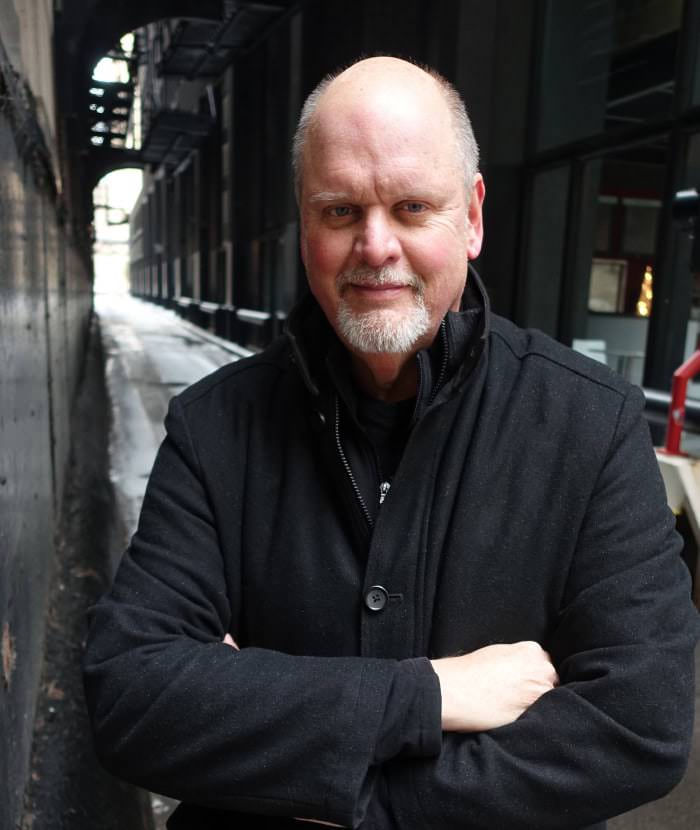
Michael Daugherty (1954 - )

Fire and Blood

25 minutes

Composer: Michael Daugherty (Born in Cedar Rapids, Iowa,
in 1954)

Work composed:
2003

World premiere: Premiered on May 3, 2003, by the Detroit
Symphony Orchestra with Ida Kavafian as soloist, conducted
by Neeme Järvi

Instrumentation: Solo violin, 2 flutes 2 oboes, 2 clarinets,
2 bassoons, 2 horns, 2 trumpets, timpani, 2 percussion, harp,
and strings

Fire and Blood
                I. Volcano
               II. River Rouge
              III. Assembly Line

Michael Daugherty

It is not often that an American composer writes a violin concerto inspired by assembly lines, steel mills, and the mythic resonance of labor—but then again, Michael Daugherty is not an ordinary composer. Known for fusing popular culture with classical tradition, Daugherty writes music that is vividly American and fiercely imaginative. Fire and Blood, his 2003 concerto for solo violin and orchestra, is a sonic mural of industrial power and human endurance.

The inspiration behind Fire and Blood is as visual as it is visceral. In the 1930s, Mexican muralist Diego Rivera was commissioned to create a series of monumental frescoes at the Detroit Institute of Arts. What he produced—Detroit Industry, a sweeping, hallucinatory depiction of Ford Motor Company’s River Rouge plant—is now considered one of the greatest works of American art. It shows workers laboring amid molten metal and massive gears, fusing man and machine into a single, relentless organism. Rivera’s wife, the painter Frida Kahlo, visited Detroit with him and suffered both physical and emotional anguish during their stay—her presence, too, haunts Daugherty’s score.

The concerto opens with Volcano, a title that evokes both the volcanic temperament of Kahlo and the smelting furnaces of Detroit’s foundries. From the first note, the solo violin sears through the orchestral texture, erupting in jagged runs. The music bristles with tension: rhythms collide, harmonies sizzle, and the violin becomes both storyteller and siren.

The second movement, River Rouge, draws its name from Ford’s sprawling River Rouge complex, a city-sized factory where raw materials once entered at one end and finished cars exited the other. Here, Daugherty slows the tempo and lets lyricism bloom. The violin sings in long, aching lines over a landscape of pulsing orchestral textures. There is a sense of distance in the harmony, a quiet grief that hints at Kahlo’s suffering, or perhaps at the ghostly presence of those whose labor fueled the American dream.

Assembly Line, the third and final movement, jolts us back to kinetic energy. The violin darts in and out of the orchestral Michael Daugherty engine, sometimes driving it, sometimes evading it. Metallic percussion, brassy blasts, and motoric figures give the impression of pistons firing and conveyor belts whirring to life. But as always with Daugherty, there’s more than just surface—beneath the industrial drive is a sense of momentum, progress, even danger. There’s a feverish joy in this finale, as if the entire orchestra is racing toward something it doesn’t entirely understand.

Like Rivera’s mural, Fire and Blood is a fusion of the monumental and the intimate, the historical and the personal. It is American music at its most raw and radiant—grappling not with mythic pasts or distant lands, but with labor, with struggle,with the fire in our factories and the blood in our veins. And in the solo violin, Daugherty gives voice to the individual—singing out against the roar of the machine, fierce and unforgotten.

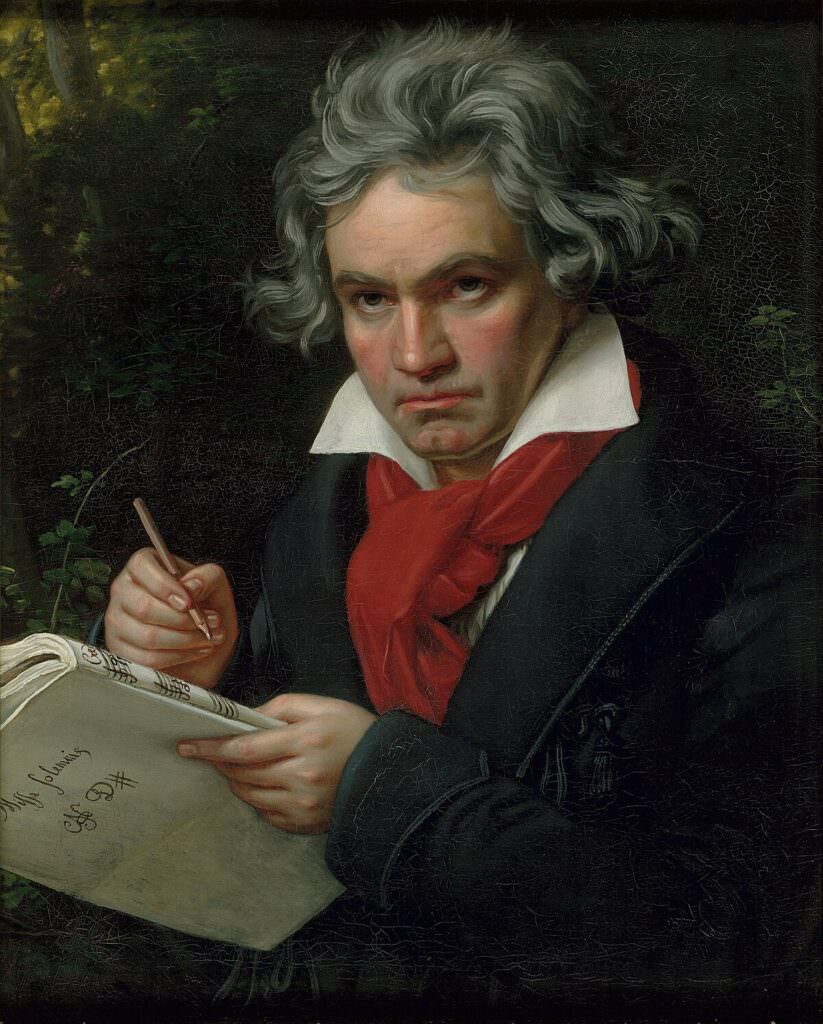
Ludwig van Beethoven (1770 - 1827)

Symphony No. 5 in C minor, Op. 67

31 minutes

Composer: Ludwig van Beethoven (Born in Bonn, Germany, in
1770; died in Vienna, Austria, in 1827)

Work composed: 1804-1808

World premiere: Premiered on December 22, 1808, in Vienna at the Theater an der Wien, conducted by the composer

Instrumentation: 2 flutes, piccolo, 2 oboes, 2 clarinets, 2 bassoons, 1 contrabassoon, 2 horns, 2 trumpets, 3 trombones, timpani, and strings

Symphony No. 5 in C minor, Op. 67

 I. Allegro con brio
II. Andante con moto
III. Allegro
IV. Allegro – Presto

Ludwig van Beethoven

It begins with four notes. Just four. But they’ve thundered across two centuries of music history with the force of destiny knocking at the door. Rarely has a musical gesture—short-short-short-long—gripped the imagination of the world so fiercely. Beethoven’s Fifth Symphony is a pillar of the canon; it is its stormiest, most defiant heartbeat.

Composed between 1804 and 1808, Symphony No. 5 emerged from a personal and political maelstrom. Beethoven, now in his mid-thirties and facing the grim reality of his encroaching deafness, was grappling with despair. At the same time, Napoleon’s armies were reshaping the map of Europe, and the ideals of liberty, equality, and revolution were unraveling in the bloodied hands of empire. This symphony became Beethoven’s answer through structure, struggle, and sound.

The first movement, Allegro con brio, launches with unmistakable urgency. The iconic four-note motif runs throughout, shaping the energy and structure of the piece. The music builds and recedes, shifting direction with intensity and purpose. For performers, it demands control, clarity, and endurance. For listeners, it’s a gripping encounter with musical force and focus.

The second movement, Andante con moto, presents two alternating themes—one noble, one lyrical—unfold in a set of variations that feel almost like interior monologue. The strings speak with warmth, the winds with clarity. But even here, in the supposed “slow” movement, Beethoven is not content to rest. There is grandeur, yes—but also grit. This is the eye of the storm, not its end.

The third movement, Allegro, returns to the shadows with an increasing suspense. The low strings sneak in with a dark, pulsing rhythm. A fugitive theme stalks through the orchestra, and the horns burst forth with something both noble and menacing. And then—Beethoven does something extraordinary. Without pause or ceremony, the music tiptoes into the final movement: no applause break, no breath, just a shimmering bridge from night into day.

The finale, Allegro – Presto, is the light bursting through. Where the symphony began in C minor, it now radiates in C major—triumphant and unshackled. The full force of the orchestra is unleashed, now with added piccolo, trombones, and contrabassoon—the first time Beethoven had used these forces in a symphony. It is the sound of victory hard-won, of darkness endured, of fate not just met, but overcome.

In the end, Symphony No. 5 is about transformation—of theme, of mood, of man. Beethoven takes a musical fragment and, through force of will and imagination, reshapes it into a symphonic universe. It is music born in adversity, forged in revolution, and still crackling with relevance. Every performance feels like an event, because it is.

Join our mailing list.

Insider news, musical previews, and special deals.

ADMINISTRATION

Suite 305, North Tower
Plaza of the Rockies
111 S. Tejon St.
Colorado Springs, CO 80903

MAILING ADDRESS

P.O. Box 1266
Colorado Springs, CO 80901