Grażyna Bacewicz (1909 - 1969)
Overture
6 minutes
Composer: Grażyna Bacewicz (Born in Łódź, Poland, in 1909; died in Warsaw, Poland, in 1969)
Work composed: 1943-1944
World premiere: Premiered in 1945 in Łódź, Poland, by the Polish Radio Orchestra
Instrumentation: 2 flutes, piccolo, 2 oboes, 2 clarinets, bass clarinet, 2 bassoons, 4 horns, 2 trumpets, 3 trombones, tuba, 4 percussion, and strings
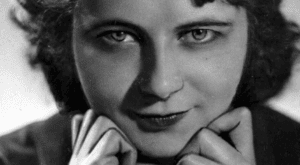
If music can carry fire in its bones, then Overture by Grażyna Bacewicz is a flame that refuses to flicker. Written in secret during the dark winter of 1944 while Poland was still under Nazi occupation, this six-minute sparkplug of a piece is less an opening gesture than a coded act of defiance—a symphonic burst of light in a year shrouded by war.
Born in 1909, Bacewicz was a violinist, pianist, composer, and wartime courier—a prodigious multi-hyphenate whose music fused modernist energy with Slavic heart. As a woman in an era that didn’t readily offer seats at the compositional table, Bacewicz carved her own. Her career spanned the cataclysms of the 20th century, and yet her music never retreated into despair. Even in its stormiest moments, it surges with wit and courage.
Overture was composed amid the horrors of World War II, when artistic creation was not only difficult—it was dangerous. Bacewicz wrote it with no commission and no guaranteed performance, only a belief in music’s power to say what could not safely be spoken. The result is a compact orchestral rollercoaster, teeming with brass-driven momentum and string-drenched agility. It begins with a fanfare that kicks the door open. The tempo is urgent, the harmonies biting, the forward thrust unmistakable.
But listen closer, and you’ll hear something more than just martial energy. There’s counterpoint in the woodwinds that teases, harmonies that slip sideways before realigning, sudden pauses that feel like raised eyebrows.
The middle section introduces a brief lyrical respite, but this is no pastoral interlude—it’s the eye of the hurricane. The rhythm soon tightens, the timpani re-enter like boots on pavement, and we’re launched back into the central tempo—now even more ferocious. The piece doesn’t build toward a climax so much as detonate into one: a final brassy blaze that leaves no doubt about the composer’s intent.
While Overture is often viewed as a curtain-raiser, it stands tall on its own. It’s a bold encapsulation of Bacewicz’s musical personality: kinetic, iron-willed, laced with humor and rigor. Its a glimpse of a composer who would go on to write symphonies, string quartets, and concertos that placed her among the most significant European voices of the mid-20th century.
Philip Glass (1937-)
The Light
23 minutes
Composer: Philip Glass (Born in Baltimore, Maryland, in 1937)
Work composed: 1987
World premiere: Premiered on October 29, 1987, by the Cleveland Symphony Orchestra, conducted by Christoph von Dohnani
Instrumentation: 2 flutes, piccolo, 2 oboes, 2 clarinets, bass clarinet, 2 bassoons, 4 horns, 3 trumpets, 3 trombones, tuba, timpani, 4 percussion, harp, piano, and strings
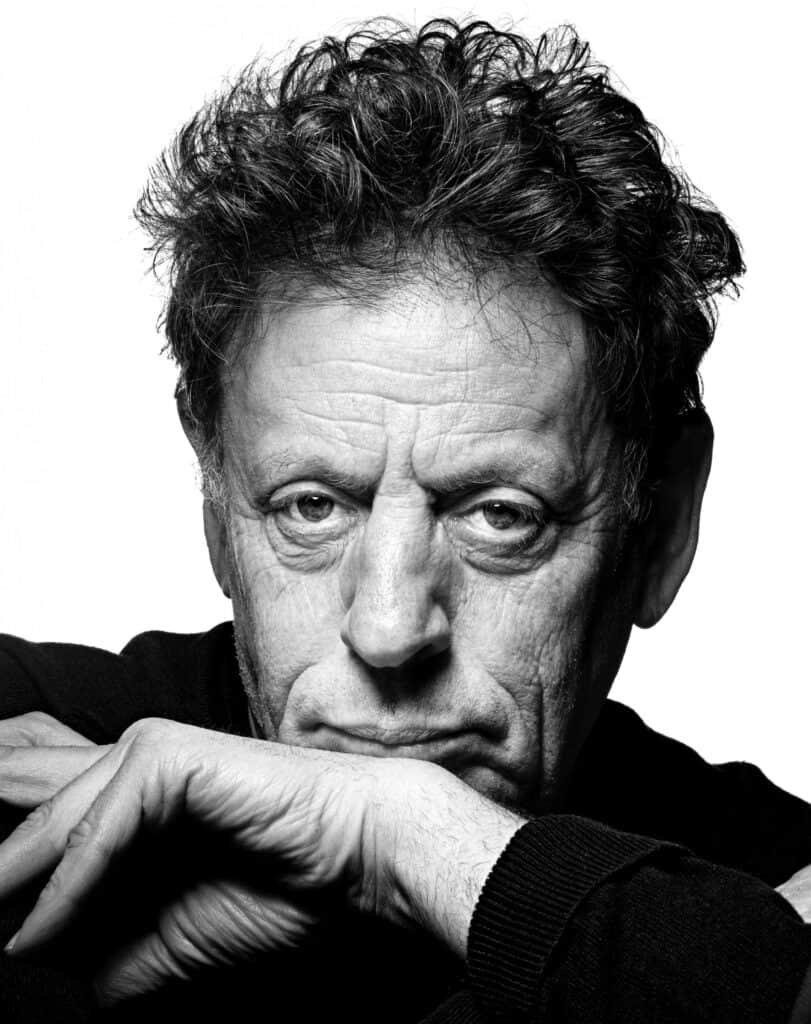
Composed in 1987 on commission to commemorate the 100th anniversary of the Michelson–Morley experiment—an optical test that disproved the existence of “luminiferous aether” and paved the way for Einstein’s theory of relativity—The Light is Philips Glass’s answer to a paradox: How do you write music about a thing that does not exist?
True to form, Glass doesn’t explain the science. He dramatizes the awe. Over 23 minutes, the work unfolds not as narrative but as a vast harmonic organism—living, breathing, evolving in slow cycles.
The Light begins with a low, trembling hum—strings shimmering like atoms just before ignition. The harmonic base is simple, but the texture quickly thickens, as winds and brass begin to unfurl long tones that slide past one another like tectonic plates. The tempo feels suspended—neither fast nor slow, but eternal.
Then, suddenly, brass pierces through the haze with rhythmic figures. These patterns are unmistakably “Glassian”: looping arpeggios, syncopated triplets, gently layered over one another. But this is not Einstein on the Beach minimalism. It is warmer, lusher—Glass with more orchestral color, more breath, more resonance.
About halfway through, a new energy enters: strings surge upward in arcing lines, brass responds with broad proclamations, and the rhythm begins to churn. There’s a sense of awe here—Glass paying quiet homage to the leap in human knowledge made by Michelson and Morley, and perhaps more broadly, to the idea of light as both particle and wave, both presence and absence. The music vibrates with the paradox.
As the piece spirals toward its close, previous motifs return like old stars coming into orbit. The texture thins again, the colors soften. The final moments shimmer in the high strings and winds.
And like its namesake, The Light cannot be held. It must be seen through. Heard through. Sat inside. It is music as experiment—not in the sense of failure and success, but in the sense of curiosity and awe.
Joaquín Rodrigo (1901 - 1999)
Concierto de Aranjuez
21 minutes
Composer: Joaquín Rodrigo (Born in Sagunto, Spain, in 1901; died in Madrid, Spain, in 1999)
Work composed: 1939
World premiere: Premiered on November 9, 1940, in Barcelona, with Regino Sainz de la Maza as soloist and César Mendoza conducting
Instrumentation: Solo guitar, 2 flutes (2nd doubling piccolo), 2 oboes (2nd doubling English horn), 2 clarinets, 2 bassoons, 2 horns, 2 trumpets, and strings
I. Allegro con spirito
II. Adagio
III. Allegro gentile
Few pieces so gracefully defy the boundaries of genre, geography, and even time itself as Joaquín Rodrigo’s Concierto de Aranjuez. A work for guitar and orchestra, it is Spanish to its core—sun-drenched, melancholic, vibrant—but it is also a universal elegy of love and loss. Composed in 1939 as Europe stood on the edge of devastation, the Concierto offers a vision of tranquility rooted in a deeply personal emotional terrain. Though it often evokes the atmosphere of Spain’s royal gardens, it is not a postcard. It is a prayer.
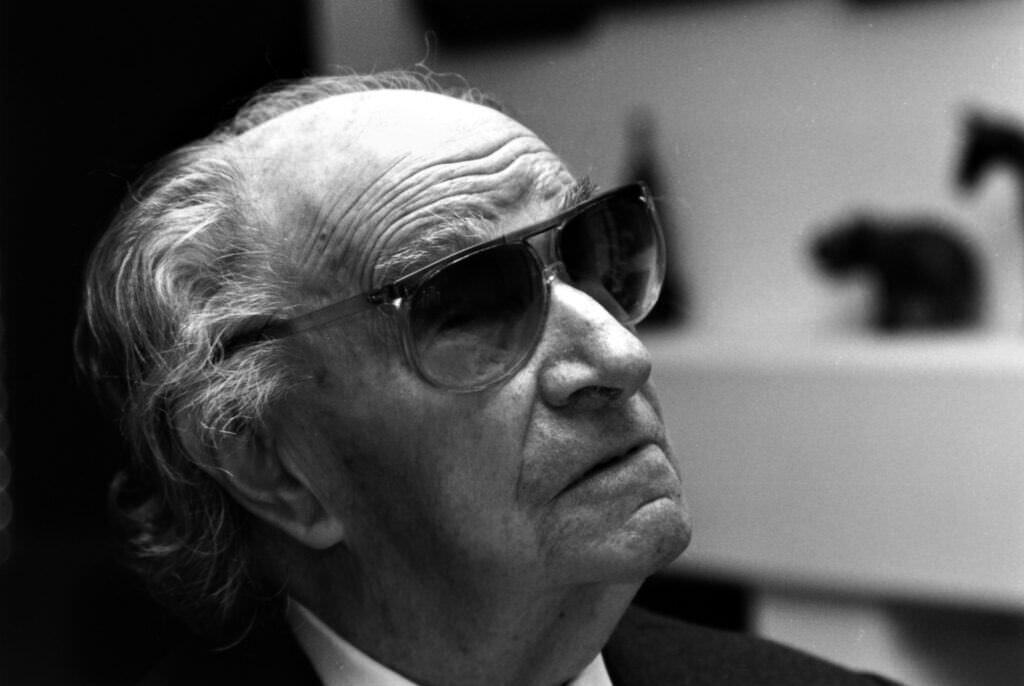
Rodrigo, blind since the age of three due to diphtheria, wrote the Concierto entirely in Braille. He later claimed that the idea for the work came to him “like a gift from God,” conceived not in Spain but in Paris, while he and his wife Victoria sheltered from the political aftershocks of the Spanish Civil War. Though Rodrigo was not a guitarist himself, he understood the instrument’s voice intimately—and perhaps more importantly, he understood its silences. The Concierto is as much about what is not said as what is sung.
The first movement, Allegro con spirito, is a radiant opening—spirited, percussive, full of rhythmic flair. It begins with the solo guitar, whose buoyant strumming immediately conjures the colors of flamenco and folk tradition.
And then comes the Adagio. If the first movement is the light, the second is the shadow it casts. A solitary cor anglais introduces the now-famous melody—elegant, winding, heartbreakingly human. The guitar soon enters not as a virtuoso, but as a mourner—echoing, answering, embellishing with a quiet grief. The movement grows from lament to catharsis, with the guitar weaving arabesques above waves of orchestral color. By the final bars, the melody returns. It is one of the most transcendent adagios in all of music.
The third movement, Allegro gentile, restores the light, but it does not erase the ache. Dance rhythms abound, but they are gentler now, tinged with nostalgia. The guitar leads once more, playfully tossing phrases back and forth with the orchestra, as if recalling brighter days.
The Concierto de Aranjuez endures not just because it is beautiful, but because it is honest. It is music that carries both sunlight and sorrow in its hands, never dropping either. Rodrigo’s masterpiece offers no grand philosophical statement—only the sound of someone who has seen darkness, heard silence, and still chosen to sing.
Georges Bizet (1838 - 1875)
Selections from Carmen
25 minutes
Composer: : Georges Bizet (Born in Paris, France, in 1838; died in Bougival, France, in 1875)
Work composed: 1873-1874
World premiere: March 3, 1875, at the Opéra-Comique in Paris
Instrumentation: 2 flutes (2nd doubling piccolo), 2 oboes (2nd doubling English Horn), 2 clarinets, 2 bassoons, 4 horns, 2 trumpets, 3 trombones, tuba, timpani, 4 percussion, harp, and strings
Selections from Carmen
– Aragonaise
– Habanera
– La Garde Montante
– Seguedille
– Les Dragons d’Alcala
– Chanson du toreador
– Intermezzo
– Danse Bohéme
Some works are born into acclaim. Carmen was not one of them.
When Georges Bizet’s opera premiered in 1875, it scandalized audiences. Too raw, too sensual, too streetwise for the polite world of the Opéra-Comique. Here was an opera with cigarette girls, soldiers, smugglers, and a heroine who didn’t die for love but for freedom. A woman who refused to be possessed. Paris was aghast—and the critics weren’t much kinder. Just three months later, Bizet died at the age of 36, never knowing his opera would become one of the most performed and beloved in the world.
To hear Carmen today is to understand why it endured. From its opening bars, the music demands your attention. And in orchestral selections drawn from the full opera, we get all the flame without the libretto: duels, dances, declarations of love and war, all painted in the unmistakable hues of Spain as imagined by a Parisian with an unmatched melodic gift.
The suite often opens with the ominous Prélude, which foreshadows Carmen’s fate. In barely a minute, Bizet conjures a drama of life and death: low brass intones the fatalistic fate motif, then vanishes into strings and a fleeting military march.
Then comes the swagger. The Aragonaise, with its slashing string rhythms and clattering castanets, gallops in like a toreador entering the ring. The Intermezzo offers a tender interlude: a solo flute glides over hushed strings. In the opera, this moment precedes the third act—dawn in the mountains—and its calm is the kind that trembles, knowing the storm is near.
The Habanera, Carmen’s calling card, is next. “L’amour est un oiseau rebelle”—“Love is a rebellious bird.” And so is she. The rhythm lingers and teases while the melody snakes its way through the orchestra. It’s one of the most iconic tunes in opera, not just because it’s catchy, but because it tells the truth. Love, Carmen warns, cannot be tamed.
Later, we hear the Les Toréadors—a fanfare to machismo, all brass and bravado. And yet, by the time it arrives in the opera’s final act, we know what lurks beneath its glitter: obsession, violence, and loss. Carmen has already made her choice, and it is not Don José. She chooses freedom, even if it costs her life.
Carmen is more than a story of doomed love. It is a story of defiance, of agency, of a woman who dares to live by her own rules in a world that punishes her for it. And in these orchestral selections, Bizet’s music tells that story with searing clarity—no words required.