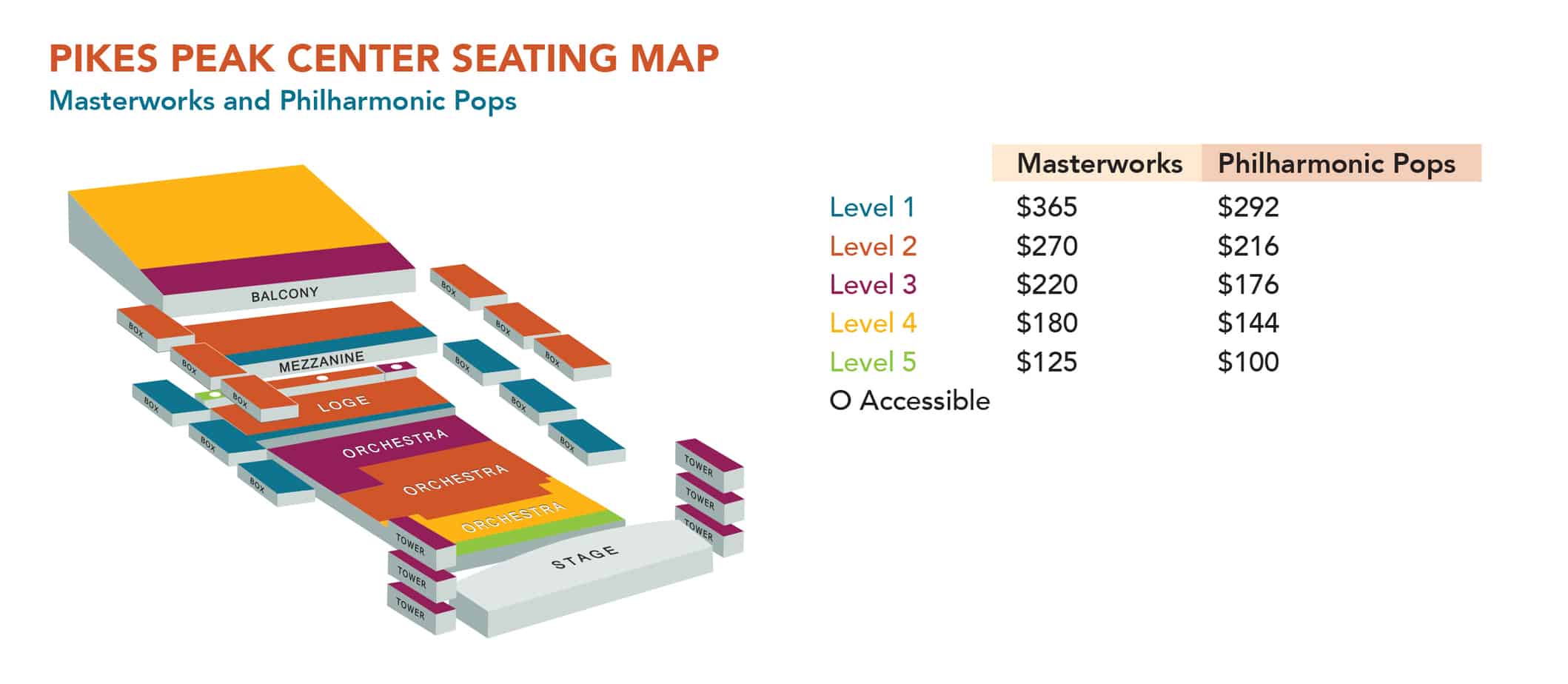
Camille Pépin (1990 - )
Laniakea
15 minutes
Composer: Camille Pépin (Born in Amiens, France, in 1990)
Work composed: 2019
World premiere: Premiered on May 17, 2019, at the
Auditorium de Lyon by the Orchestre National de Lyon,
conducted by Leonard Slatkin
Instrumentation: 2 flutes, 2 oboes, 2 clarinets, 2 bassoons,
4 horns, 2 trumpets, 3 trombones, tuba, timpani, 2 percussion,
and strings
Laniakea
Born in 1990 and trained at the Conservatoire de Paris, Pépin has emerged as one of the most exciting voices in 21st-century French music. Her work bridges a reverence for impressionistic color—echoes of Debussy and Messiaen abound—with a contemporary clarity all her own. Her orchestral palette is lush and nuanced. Her music draws on science, philosophy, and myth, but never loses its emotional honesty.
Laniakea, composed in 2016, is an orchestral work of just 15 minutes, but it contains galaxies. The title comes from the Hawaiian word meaning “immeasurable heaven,” used by astronomers to describe the supercluster of galaxies-over 100,000 of them—gravitationally bound together in a region of the observable universe measuring some 500 million light years across. Pépin offers a tone-poem for the stars, one that uses orchestral light and shadow to trace the mystery, stillness, and motion of celestial forces.
The piece begins at the edge of audibility—wisps of strings, delicate fluttering flutes. One feels suspended, as though peering into a night sky so vast it defies comprehension. This is Pépin’s great gift: to evoke through atmosphere.
Gradually, rhythm begins to pulse beneath the textures, like a gravitational rhythm emerging from cosmic drift. Layers of harp, piano, celesta, and vibraphone blend into something that feels almost electronic in its sheen, but entirely acoustic in origin.
Pépin subtly guides the piece through phases: from the quiet birth of galaxies to a climax where the full orchestra surges like solar wind. Brass and percussion enter not to conquer, but to expand the horizon. Rather than traditional theme-and-variation or sonata form, Laniakea unfolds like a spiral.
The climax does not resolve so much as dissipate. Like a distant star collapsing into itself, the music recedes into near silence, then fleeting traces of the opening textures return. The effect is contemplative. Pépin doesn’t conclude the journey with finality; she simply lets it drift beyond hearing, as if the music continues somewhere just out of reach.
Pyotr Ilyich Tchaikovsky (1840 - 1893)
Piano Concerto No. 1
32 minutes
Composer: Pyotr Ilyich Tchaikovsky (Born in Votkinsk, Russia, in 1840; died in Saint Petersburg, Russia, in 1893)
Work composed: between November 1874 and February
1875
World premiere: Premiered at the Boston Music Hall on
October 25, 1875, with Hans von Bülow as the soloist.
Instrumentation: 2 flutes, 2 oboes, 2 clarinets, 2 bassoons,
4 horns, 2 trumpets, 3 trombones, timpani, and strings
Piano Concerto No. 1 in B minor, Op. 23
I. Allegro ma non troppo e molto maestoso
II. Andantino semplice
III. Allegro con fuoco

It’s difficult to imagine now, but one of the most iconic piano concertos in history was, at first, emphatically rejected. When Pyotr Ilyich Tchaikovsky first presented his First Piano Concerto to the famed pianist Nikolai Rubinstein—the very man he hoped would premiere it—he was met not with awe, but scorn. Rubinstein, in a fit of fury, declared the piece “worthless,” “unplayable,” and demanded massive revisions. Tchaikovsky, heartbroken but resolute, refused. “I shall not alter a single note,” he reportedly said, and instead sent the work abroad to the German virtuoso Hans von Bülow, who performed it to thunderous applause in Boston in 1875. Vindicated, Tchaikovsky would later make two rounds of revisions; not to appease Rubinstein, but to refine orchestration and pacing. In the end, the concerto became one of the most beloved and frequently performed works in the piano repertoire.
From its first bars, the concerto declares itself in grand, unforgettable fashion. A thunderous orchestral fanfare, full-bodied and noble introduces the pianist, not with athletic flourishes, but with monumental chords that seem to carve marble out of the air. The soaring main theme, however, is famously a red herring: it never returns. What follows is a dynamic voyage through the musical psyche—romantic in spirit, Slavic in soul, and unmistakably Tchaikovskian in its emotional volatility.
The first movement, Allegro non troppo e molto maestoso, weaves together drama and lyricism with almost theatrical flair. After the opening grandeur fades, the piano unfurls the true primary theme: a skipping, folk-inflected melody of Ukrainian origin, agile and almost mischievous, offset by stormier orchestral responses. Tchaikovsky juxtaposes intimacy with spectacle, drawing from the wellspring of Russian folk music but never enslaved by it. The movement’s development section explores darker harmonies, and yet there is always melody—always a sense that the heart is never far from the hand.
The second movement, Andantino semplice, begins with a quiet hush—as if stepping into a snow-covered village at twilight. A solo flute introduces the main theme, gentle and childlike, followed by the piano’s delicate reply, almost as if reminiscing in real time. The calm is soon interrupted by a scherzando middle section, a curious little dance with balletic charm (some hear hints of a French cancan here). And yet the tenderness returns—muted strings, simple harmonies, and a sense of suspended time.
The finale, Allegro con fuoco, wastes no time erupting into motion. The piano and orchestra launch together into a driving tarantella-like theme, another nod to Ukrainian folk rhythms. Tchaikovsky’s hallmark is here in full flame—restless energy, swirling orchestration, and unapologetic grandeur. Yet amidst the frenzy, moments of lyricism appear—it is a movement of triumph, not just for the pianist, but for the composer who once sat humiliated by Rubinstein’s scathing review. Tchaikovsky’s First Piano Concerto is more than a showpiece— it’s a rite of passage for pianists and a touchstone for audiences, living equally in the concert hall and the collective imagination. When Van Cliburn won the first International Tchaikovsky Competition in 1958 with this very work, his triumph echoed the bold spirit of the composer himself. That moment sparked the creation of the Van Cliburn International Piano Competition in 1962. That legacy continues in the Signature Series at the Ent Center for the Arts, featuring this year’s medalists—Silver Medalist Vitaly Starikov, Gold Medalist Aristo Sham, and Bronze Medalist Evren Ozel.
The concerto still sings, roars, weeps, and dances. It tests a pianist’s skill—but above all, it reveals Tchaikovsky’s heart: one that beat, defiantly, against expectation.
Igor Stravinsky (1882 - 1971)
Firebird Suite
30 minutes
Composer: Igor Stravinsky (Born in Oranienbaum, Russia, in 1882; died in New York City, USA, in 1971)
Work composed: Originally composed in 1909–10; suite
version created in 1945
World premiere: Suite premiered on November 30, 1945, by the Boston Symphony Orchestra, conducted by Serge Koussevitzky
Instrumentation: 2 flutes (2nd doubling piccolo), 2 oboes, 3 clarinets, 2 bassoons, 4 horns, 2 trumpets, 3 trombones, tuba, timpani, 3 percussion, harp, piano, and strings
The Firebird Suite (1945 version)
I. Introduction
II. The Firebird and its Dance
III. The Princesses’ Round Dance
IV. Infernal Dance of King Kashchei
VI.Lullaby
VII. Finale
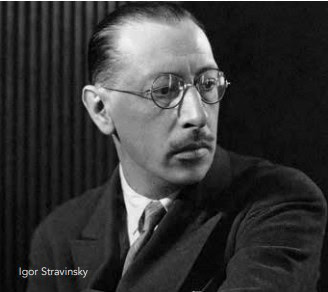
The Firebird is where it all begins. Before Petrushka, before The Rite of Spring, before Stravinsky fractured classical music into modernism’s dazzling kaleidoscope, there was The Firebird—a ballet that launched the composer from obscurity to international acclaim. Composed in 1910 when Stravinsky was just 27, this music crackles with the energy of a young artist discovering his own magic.
But the version we most often hear in concert halls—the 1945 Firebird Suite—is a reflection, a reimagining. Nearly 35 years after the original ballet’s premiere in Paris, Stravinsky, now a U.S. citizen living in Hollywood, returned to the score with the wisdom and restraint of his neoclassical period. Gone is the full, decadent orchestration of the 1910 original; in its place is a leaner, more transparent sound—still glowing with color, but sharper in silhouette.
The Introduction begins in a shadowy hush—low strings and murmuring winds conjure a nocturnal world of mystery. We are deep in Russian fairy tale territory, in the magical realm of King Kashchei the Deathless, a tyrant who turns his enemies into stone. Out of this gloom emerges the Firebird, the mythical creature at the heart of the ballet, shimmering with light and movement.
In The Firebird and its Dance, the music leaps and whirls with dazzling agility. The rhythms are sharp, the harmonies kaleidoscopic, the orchestration brilliant. One hears echoes of Rimsky-Korsakov (Stravinsky’s teacher and mentor), but also the flicker of something more radical just beneath the surface—a kind of rhythmic propulsion and unexpected dissonance that would soon redefine 20th-century music.
The Princesses’ Round Dance offers a moment of serene lyricism. Over gently pulsating harp and strings, a plaintive melody rises—tender, folklike, touched with melancholy. It is a waltz, but one suspended in time, as if the princesses themselves are trapped in an enchanted sleep.
Then, without warning, comes The Infernal Dance of King Kashchei—one of the most electrifying episodes in all of Stravinsky’s output. Brass explode, timpani thunder, and the orchestra erupts in jagged rhythms. The music twists and stomps like a monstrous ritual. For performers, it is a test of control and fire; for audiences, a moment of breathless exhilaration. This is Stravinsky at his most muscular—brutal yet precise.
As the chaos subsides, Lullaby enters like a balm. Scored with exquisite delicacy, it features a haunting bassoon solo over quiet harp pulses. It is a lullaby for release—a gentle exorcism after the fury of Kashchei’s realm.
And then comes the Finale, one of the most triumphant closing pages in all of orchestral music. It begins in stillness—an ancient Russian melody slowly unfurling, simple and noble. Gradually, the music builds as the horns enter, strings swell, trumpets sing, and the theme becomes a radiant procession. Stravinsky layers his textures with inexorable force until the orchestra bursts forth in full splendor.
In The Firebird Suite, Stravinsky gives us a story without words, a myth told in rhythm and resonance. The 1945 version, in particular, strips the tale to its emotional core—mystery, fear, wonder, joy—and casts it in crystalline form. It reminds us that even the most ancient fairy tales still hold power, and that even
fire can sing.