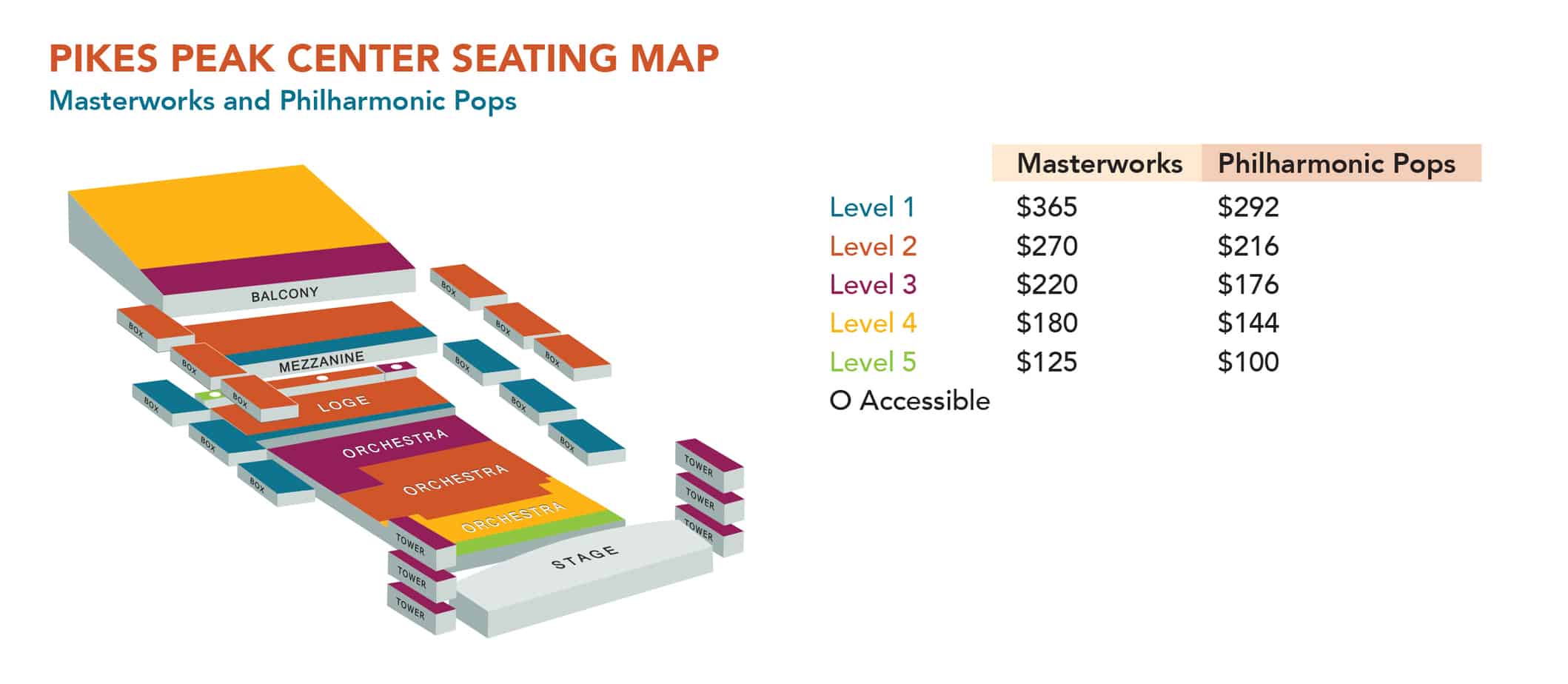
Leonard Bernstein (1918-1990)
Candide Overture
5 minutes
Composer: Leonard Bernstein (Born in Lawrence, Massachusetts, in 1918; died in New York City in 1990)
Work composed: 1956; revised 1989
World premiere: Candide premiered on Broadway on December 1, 1956, at the Martin Beck Theatre in New York, conducted by Samuel Krachmalnick. The Overture was soon excerpted and performed frequently in concert, often led by Bernstein himself.
Instrumentation: 2 flutes (2nd doubling piccolo), 2 oboes, 2 clarinets, 2 bassoons, 4 horns, 3 trumpets, 3 trombones, tuba, timpani, percussion, harp, and strings
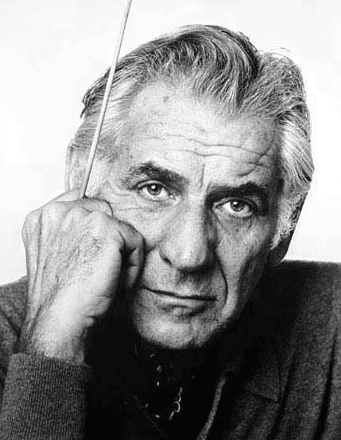
If ever an overture captured the spirit of its composer, Leonard Bernstein’s Candide Overture is the one. Sparkling, wry, and bursting with vitality, this five-minute tour de force has become one of the most beloved curtain-raisers in the symphonic repertoire. Like Bernstein himself, it straddles genres — Broadway razzle-dazzle, operetta wit, and symphonic craftsmanship — and presents them all with a twinkle in the eye.
Bernstein wrote the Overture in 1956 as the introduction to his comic operetta Candide, based on Voltaire’s satirical novella of 1759. Voltaire’s biting tale, which skewers blind optimism in a world full of calamity, was perfectly suited to Bernstein’s own penchant for mixing highbrow philosophy with Broadway showmanship. Although the original production of Candide had a troubled Broadway run, the Overture leapt off the stage almost immediately, becoming a concert favorite in its own right. Bernstein himself said he was astonished by the Overture’s instant popularity, and by the 1960s it was being performed by major orchestras across the world.
The Overture is a single, whirlwind movement, but like any Bernstein work, it is packed with character sketches, quicksilver turns of phrase, and rhythmic mischief. It opens with a pair of brilliant fanfares — trumpets and strings shooting upward in joyous proclamation, cymbals crashing down like confetti at a celebration. Right away, Bernstein announces that this is music to grab your attention and never let go.
Immediately following, the strings launch into a breathless gallop, their sixteenth notes scampering like actors rushing onto a stage in chaos. This perpetual motion, barely catching its breath, is vintage Bernstein — exuberant, slightly irreverent, but always precisely controlled.
Several themes from the operetta itself are woven in. The jaunty main tune, heard early in the violins, comes from the aria “The Best of All Possible Worlds,” an ironic refrain in Voltaire’s story that insists on optimism even as disaster strikes. A tender secondary theme, lyrical and glowing, is borrowed from the love duet “Oh, Happy We,” which expresses the innocent (and comically misplaced) hopes of Candide and Cunegonde. Bernstein treats it with genuine affection, giving a momentary respite from the surrounding frenzy.
But respite never lasts long. Almost as soon as the melody appears, Bernstein interrupts it with brassy interjections, syncopated rhythms, and a return to the galloping strings. The effect is theatrical: sincerity colliding with satire, lyricism colliding with slapstick. By the end, the orchestra races headlong into an exuberant coda, the trumpets once more blazing, the strings scurrying faster and faster, until the final chords crash down with irresistible bravura.
Like Voltaire’s novella, Bernstein’s Overture is more than surface brilliance. Its laughter is edged with irony, its optimism knowingly fragile. Behind the fireworks lies Bernstein’s unique genius: the ability to make music both a spectacle and a mirror, inviting us to delight while also to reflect.
For Bernstein, who was equally at home on the Broadway stage, the concert hall, and the conductor’s podium, Candide represented the joy of refusing to choose between worlds. The Overture embodies this refusal — it is Broadway razzmatazz written with symphonic sophistication, a love letter to European operetta infused with American jazziness, a wink at tradition and an embrace of invention.
Today, the Candide Overture is a staple of orchestral concerts — often played as an opener, but sometimes cheekily as an encore. Few works can whip up such immediate energy, or set an audience so quickly alight with joy. At just five minutes long, it achieves what many larger works strain to do: it dazzles, it charms, it entertains, and it endures.
As Bernstein himself once wrote of Voltaire’s story, “It’s all about the best of all possible worlds.” With the Candide Overture, Bernstein gave us one of the best of all possible curtain-raisers — brilliant, funny, and full of heart.
Cindy McTee (1953-)
Tempus Fugit
9 minutes
Composer: Cindy McTee (Born in Tacoma, Washington, 1953)
Work composed: 2010
World premiere: June 3, 2010 with Detroit Symphony Orchestra and its music director, Leonard Slatkin
Instrumentation: piccolo, 2 flutes, 3 oboes, 3 clarinets, 3 bassoons, 4 horns, 3 trumpets, 3 trombones, tuba, timpani, 3 percussion, and strings

The Latin phrase tempus fugit translates as “time flies,” and Cindy McTee takes that idea both literally and musically. The work opens with the delicate ticking of clocks set at slightly different speeds, a soundscape that quickly slips into flight as rhythm, color, and energy build. Jazz-tinged harmonies, playful syncopations, and glittering orchestral textures propel the music forward with exhilarating momentum.
McTee captures something essential about the modern American spirit: our relationship with time — how it races, fractures, and yet pulses with vitality. The piece unfolds as a journey from stillness to motion, from the measured tick of the clock to the full orchestral sweep of a fast-paced, forward-driving world.
Placed on a program with Gershwin’s Porgy and Bess, Barber’s Knoxville: Summer of 1915, and Bernstein’s Candide Overture, Tempus Fugit adds a distinctly contemporary voice to the celebration. Where Barber reflects on memory, Gershwin on cultural identity, and Bernstein on wit and optimism, McTee offers a meditation on time itself — a reminder of both the fleeting nature of the past 250 years and the energy that propels America into the future.
Samuel Barber (1910-1981)
Knoxville: Summer of 1915
16 minutes
Composer: Samuel Barber (Born in West Chester, Pennsylvania, 1910; died in New York, 1981)
Work composed: 1947; revised 1950
World premiere: April 9, 1948, Boston, with soprano Eleanor Steber and the Boston Symphony Orchestra, Serge Koussevitzky conducting
Instrumentation: Solo soprano, 3 flutes (1 doubling piccolo), 2 oboes, English horn, 2 clarinets, bass clarinet, 2 bassoons, contrabassoon, 4 horns, 2 trumpets, 3 trombones, tuba, timpani, percussion, harp, piano (or celesta), and strings
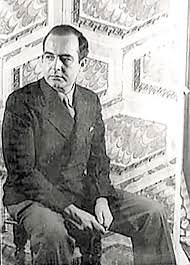
Not all great works of music are born from drama, satire, or the bustle of city life. Sometimes they come from memory — from a quiet moment so vividly recalled that it becomes timeless. Samuel Barber’s Knoxville: Summer of 1915 is such a piece.
Barber was 37 when he read James Agee’s prose poem of the same name. Agee, writing in 1938, recalled a summer evening of his childhood in Knoxville, Tennessee: porches, rocking chairs, streetcars, parents chatting while children drowsed on their laps. The text is both ordinary and profound, carrying the ache of nostalgia for innocence and the awareness of its fleetingness. Barber, then caring for his dying father, felt a deep kinship with Agee’s words, and in them he found a reflection of his own memories of childhood.
Barber’s score captures the flow of memory. The soprano’s line hovers between speech and song, unfolding like a child’s dreamy narration. The orchestra shifts seamlessly from shimmering stillness to sudden surges of sound, mirroring how recollections can leap from the ordinary to the overwhelming.
We hear the hush of a summer night in the opening, strings and winds rocking gently like a porch swing. Soon the music brightens into a bustling street scene: the clatter of streetcars, the hum of voices, the vividness of life glimpsed through a child’s eyes. Then, without warning, the music turns inward. Barber writes melodies of rapt simplicity, almost hymn-like, as the child contemplates the mystery of life, death, and belonging.
The effect is hypnotic. Barber never forces the drama; instead, he lets the images drift by, woven together in an unbroken stream. At the close, the soprano voice softens to a near whisper, as the child drifts into sleep under the protective gaze of family and sky.
Though rooted in Agee’s Southern childhood, Knoxville: Summer of 1915 speaks to something universal. Nearly everyone has known such evenings: the warmth of family close at hand, the comfort of being small in a vast world, the awareness — dim even in childhood — that such moments cannot last forever. Barber’s music transforms that recognition into sound, at once intimate and expansive, nostalgic and consoling.
Placed alongside Gershwin’s Porgy and Bess and Bernstein’s Candide, Barber’s Knoxville offers a striking contrast. Gershwin brings us the streets of Catfish Row, full of laughter and heartbreak; Bernstein spins Voltaire’s satire into glittering overture and operetta. Barber turns inward, finding America not in spectacle or satire but in memory: a summer porch, a child’s drowsy wonder, the eternal hush of twilight.
Barber once described Knoxville as “lyric rhapsody.” That phrase is perfect. It is rhapsodic in the way memories tumble together, shifting from one scene to the next. And it is lyric in the way every line seems to sing, as natural as breath.
More than a setting of Agee’s words, Knoxville is Barber’s elegy for innocence — his own, Agee’s, ours. In its quiet way, it stands beside Gershwin and Bernstein as another vision of America: not brash or satirical, but tender, timeless, and profoundly human.
“Knoxville: Summer of 1915”
A Prose Poem by James Agee
It has become the time of evening
when people sit on their porches,
rocking gently and talking gently
and watching the street
and the standing up
into their sphere of possession of the trees,
of birds’ hung havens, hangers.
People go by; things go by.
A horse, drawing a buggy, breaking his hollow iron music on the asphalt;
a loud auto; a quiet auto;
people in pairs, not in a hurry,
scuffling, switching their weight of aestival body, talking casually,
the taste hovering over them of vanilla, strawberry, pasteboard and starched milk,
the image upon them of lovers and horsemen, squared with clowns in hueless amber.
A streetcar raising its iron moan:
stopping, belling and starting; stertorous; rousing and raising again its iron increasing moan
and swimming its gold windows and straw seats on past and past and past,
the bleak spark crackling and cursing above it like a small malignant spirit set to dog its tracks;
the iron whine rises on rising speed;
still risen, faints; halts; the faint stinging bell;
rises again, still fainter, fainter, lifting, lifts, faints forgone: forgotten.
Now is the night one blue dew.
Now is the night one blue dew,
my father has drained,
now he has coiled the hose.
Low on the length of lawns,
a frailing of fire who breathes …
Parents on porches: rock and rock.
From damp strings morning glories hang their ancient faces.
The dry and exalted noise of the locusts from all the air at once enchants my eardrums.
On the rough wet grass of the backyard my father and mother have spread quilts.
We all lie there, my mother, my father, my uncle, my aunt, and I too am lying there …
They are not talking much, and the talk is quiet,
of nothing in particular, of nothing at all in particular, of nothing at all.
The stars are wide and alive, they seem each like a smile of great sweetness, and they seem very near.
All my people are larger bodies than mine…
with voices gentle and meaningless like the voice of sleeping birds.
One is an artist, he is living at home.
One is a musician, she is living at home.
One is my mother who is good to me.
One is my father who is good to me.
By some chance, here they are, all on this earth;
and who shall ever tell the sorrow of being on this earth,
lying, on quilts, on the grass, in a summer evening, among the sounds of the night.
May God bless my people, my uncle, my aunt, my mother, my good father,
oh, remember them kindly in their time of trouble;
and in the hour of their taking away.
After a little I am taken in and put to bed.
Sleep, soft smiling, draws me unto her:
and those receive me, who quietly treat me,
as one familiar and well-beloved in that home:
but will not, no ,will not, not now, not ever;
but will not ever tell me who I am.
George Gershwin
Porgy and Bess: A Concert of Songs (arr. Robert Russell Bennett)
40 minutes
Composer: George Gershwin (Born in Brooklyn, New York, in 1898; died in Los Angeles, California, in 1937)
Work composed: Opera composed 1934–1935; Concert of Songs arrangement composed in 1943
World premiere: Premiered in 1943 by the Pittsburgh Symphony Orchestra under Fritz Reiner
Instrumentation: Soprano and baritone soloists, 2 flutes (1 doubling piccolo), 2 oboes, 2 clarinets, 2 bassoons, 4 horns, 2 trumpets, 3 trombones, tuba, timpani, percussion, harp, piano, and strings
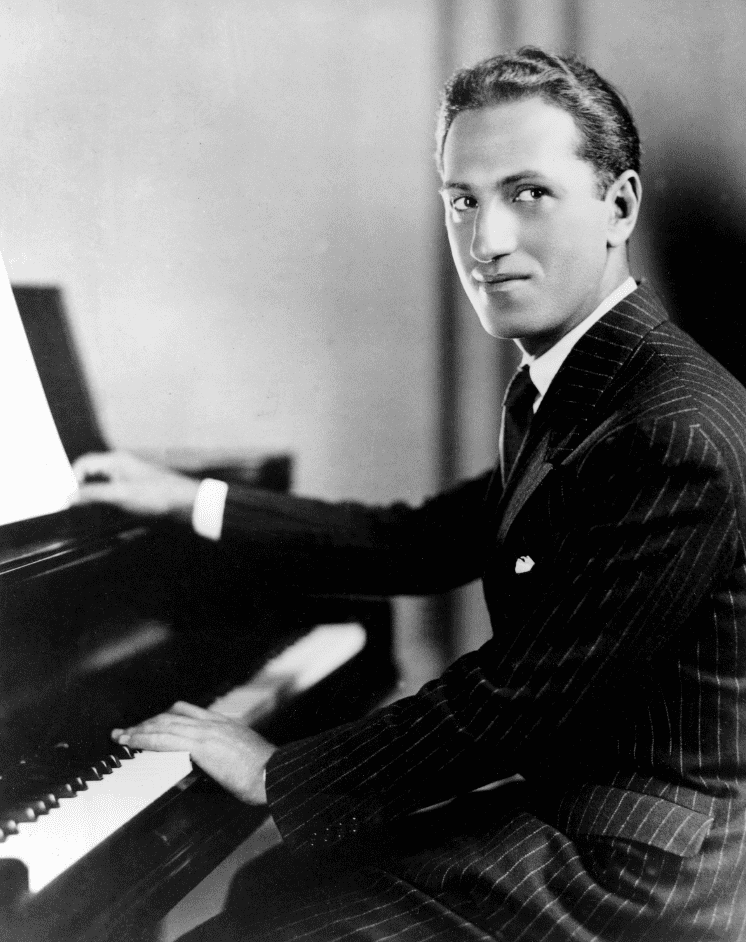
Introduction
I. Summertime
II. A Woman is a some-time thing
III. Gone, gone, gone
IV. My man’s gone now
V. The promise’ lan’
VI. I got plenty o’ nuttin’
VII. Bess, you is my woman now
VIII. Oh, I can’t sit down
IX. It ain’t necessatily so
X. There’s a boat dat’s leavin’ soon for New York
XI. Oh Lawd, I’m on my way
George Gershwin’s Porgy and Bess is a flashpoint of American music where Broadway met the blues, where spiritual met symphonic, where folk idiom and formal technique collided and coalesced into something utterly, defiantly new. When it premiered in 1935, audiences didn’t quite know what to make of it. Was it jazz? Was it opera? Was it too grand, too vernacular, too “other”? Nearly a century later, we know better. Porgy and Bess was ahead of its time—and its songs have long since become part of the American bloodstream.
Arranger Robert Russell Bennett, himself a titan of orchestral craft and Broadway finesse, knew these songs had lives beyond the opera stage. His Concert of Songs, created in 1943, gathers the most luminous moments of the opera and threads them into a sweeping 40-minute journey—retaining the emotional arc while distilling the dramatic essence.
The music begins with “Summertime,” that lullaby-turned-icon, sung with aching simplicity by Clara. Gershwin’s genius is on full display in just a few bars—lush harmonies floating under a melody so elemental it feels like it’s always existed. Bennett’s orchestration preserves the heat and haze of a Charleston summer, where the air itself seems to sway.
We move quickly through “A Woman Is a Sometime Thing” and “My Man’s Gone Now”, which shift the mood from tenderness to grief. The baritone’s earthy swagger in the former gives way to the soprano’s raw lament in the latter. Gershwin draws from the spiritual tradition but infuses it with chromatic unease—grief that coils rather than flows, unresolved and restless.
Then comes “I Got Plenty o’ Nuttin’,” Porgy’s anthem of contentment sung with banjo in hand and an open heart. It’s light on the surface, but not naïve. The joy here is hard-won—a declaration of spiritual abundance in a world that offers little else. Bennett gives the orchestration a bounce, a looseness, like sun dancing on a washboard.
As the suite progresses, we encounter “Bess, You Is My Woman Now,” a duet of fragile unity. Baritone and soprano voices entwine over soft strings and wind chorales, their harmony tender, their future uncertain. It’s a love song haunted by circumstance, by the pull of addiction, by the shadow of Crown. The orchestrations ache with the knowledge that this peace may not last.
Then, a crack of lightning: “It Ain’t Necessarily So.” Sportin’ Life struts in with his sly, syncopated disbelief. It’s the opera’s satire and its smirk. Gershwin builds this number on blues scales and rhythmic mischief, letting clarinets shimmy and brass pop with irreverent wit. The orchestra becomes a jazz band on its best behavior—and Bennett knows exactly how to let it misbehave just enough.
But Porgy and Bess always circles back to heartbreak. “I Loves You, Porgy” is a whispered plea for safety, sung by Bess as she clings to something pure. The music barely rises above a murmur, as if to speak louder might shatter it. The orchestra cushions the voice in velvet, then slowly thins to nothing.
Finally, the suite ends as the opera does: “Oh, Lawd, I’m on My Way.” Porgy, left alone, sets off in his goat cart, broken but not beaten. It is not a triumphant ending, but it is resolute. Gershwin gives him music that’s both hymn and folk tune—simple, spare, and soaring upward.
In its full operatic form, Porgy and Bess is a sprawling, complex portrait of Black American life in the South, composed by a white Jewish New Yorker and embedded with both reverence and contradiction. In this concert adaptation, we get its heart. Not all the story, but all the soul.