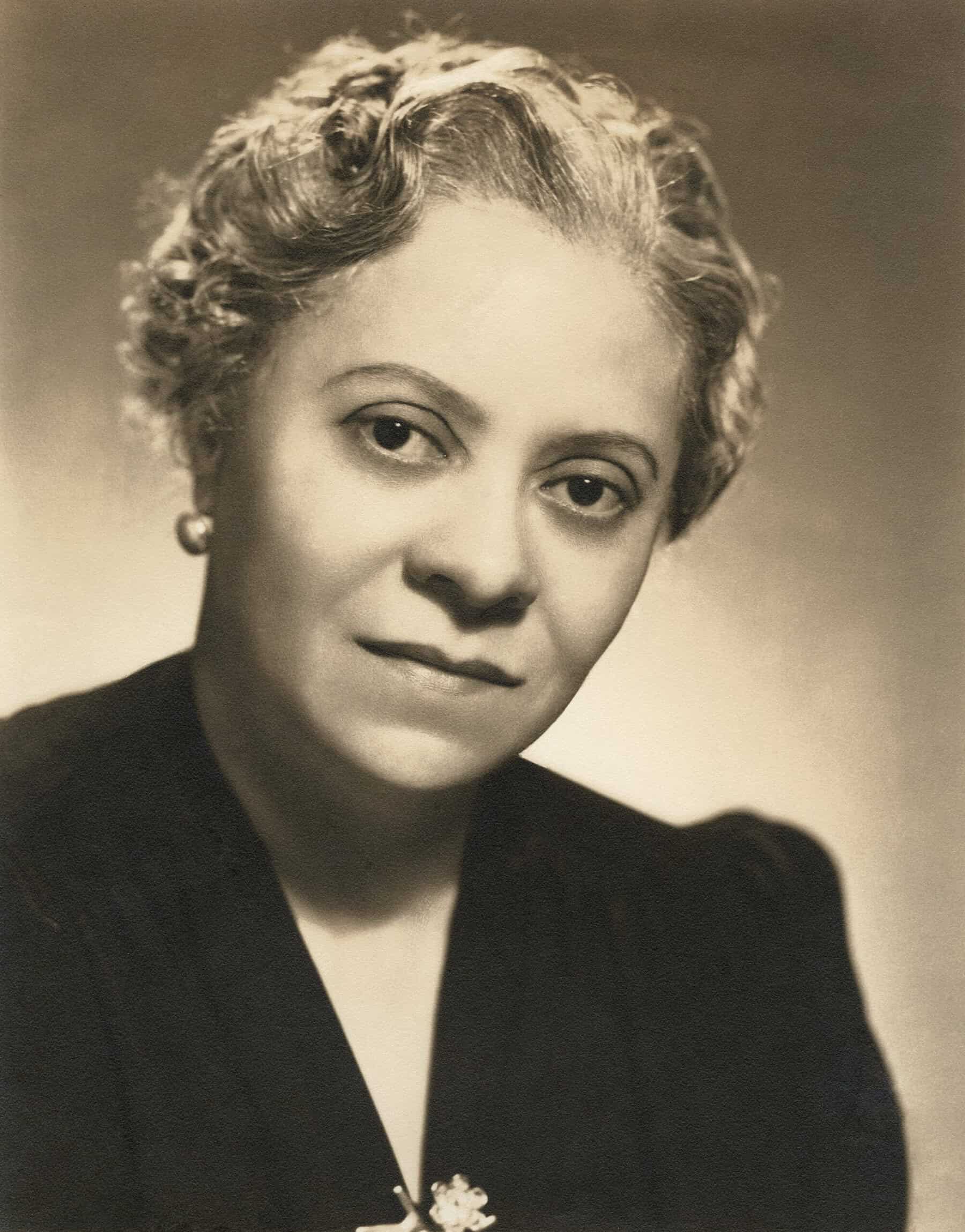
Florence Price (1887-1953)
Ethiopia’s Shadow in America
14 minutes
Composer: Florence Price (Born in Little Rock, Arkansas, USA, in 1887; died in Chicago, Illinois, USA, in 1953)
Work composed: 1932
World premiere: Posthumously premiered in January 2015, by the Arkansas Symphony Orchestra, conducted by Geoffrey Robson
Instrumentation: 2 flutes, piccolo, 2 oboes, 2 clarinets, 2 bassoons, 4 horns, 2 trumpets, 3 trombones, tuba, timpani, 4 percussion celesta, and strings
I. Adagio – Allegretto: The Arrival
II. Andante: Resignation and Faith
III. Allegro: His Adaptation
Florence Price’s Ethiopia’s Shadow in America is a reckoning in sound. Composed in 1932, during the depths of the Great Depression and the height of Jim Crow segregation, it tells a sweeping and profoundly human story: that of African Americans’ journey from brutal displacement to cultural resilience and creative transcendence.
For decades, the piece was lost—along with many of Price’s manuscripts—until a 2009 discovery of her forgotten archives during a house renovation in Illinois brought new attention to her legacy. It wasn’t until 2015 that this work received its long-overdue premiere, nearly 70 years after Price’s death.
The title itself is striking: “Ethiopia” here stands as a broader symbol for Africa, a nod to the historical and biblical associations of Black identity with the ancient, noble lineage of Ethiopia. “Shadow” evokes displacement, pain, and otherness—but also presence, dignity, and endurance. Price’s music embodies all of this at once.
The first movement, The Arrival, opens with heavy, deliberate gestures in the lower strings and brass. There is a sense of burden, of ships cutting through dark waters. But Price doesn’t lean into horror or pity—she composes with restraint and reverence. The melodies are somber, shaped by minor modes and rich, almost spiritual harmonies.
In the second movement, His Resignation and Faith, the mood softens. This is where Price’s gift for lyrical writing shines. The strings sing in long, warm arcs; the winds murmur like voices in prayer. The pacing is gentle, meditative, and deeply dignified.
Then, in the third movement, His Adaptation, the tone shifts completely. Price channels folk idioms and dance rhythms into her orchestration, letting the percussion, winds, and strings playfully intertwine. The “fusion” in the title is clear: African heritage and American experience blend into something unmistakably new. The music is celebratory without being naïve—triumphant, but aware of the journey it has taken to get here.
Ethiopia’s Shadow in America is not only a powerful artistic statement—it is a cultural document, a mirror held to the past, and a beacon to the present. That it remained unheard for so long is a tragedy. That we hear it now is a triumph—not just for Florence Price, but for the many voices she represents.
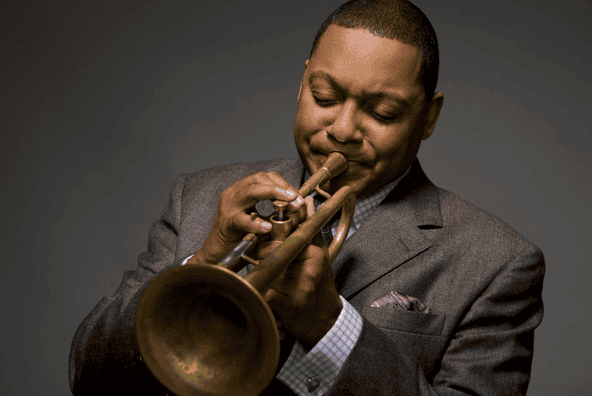
Wynton Marsalis (1961-)
Trumpet Concerto
35 minutes
Composer: Wynton Marsalis (Born in New Orleans, Louisiana, USA, in 1961)
Work composed: 2015
World premiere: Premiered on April 27, 2023, by Michael Sachs and the Cleveland Orchestra, at Severance Music Center in the Mandel Performance Hall, under the direction of Franz Welser-Möst.
Instrumentation: Solo trumpet, 2 flutes (2nd doubling piccolo), 2 oboes (2nd doubling English Horn), 3 clarinets, 3 bassoons, 4 horns, 3 trumpets, 3 trombones, tuba, timpani, 4 percussion, and strings
I. March
II. Ballad
III. Mexican Sun
IV. Blues
V. French Pastoral (Flowing Waltz)
VI. Harlequin Two-Step
Wynton Marsalis’s Trumpet Concerto is a bold proclamation of identity, history, and artistic lineage. Premiered in 2023 by Michael Sachs with the Cleveland Orchestra, the work spans centuries and continents, cultures and idioms—and we are thrilled to welcome Sachs as soloist in this performance. It moves effortlessly between jazz and Baroque, swing and spiritual, blues and Bach, evoking the full gravity and grit of the trumpet’s legacy.
Marsalis—Pulitzer Prize winner, Lincoln Center titan, and unapologetic musical polyglot—has long resisted the tidy boxes of genre. His Trumpet Concerto dances across lines with grace. Comprising six movements, the work behaves less like a typical concerto and more like a symphonic odyssey—a suite of scenes, or better yet, of testimonies. It is music as storytelling, and the trumpet is the narrator, the griot, the trickster, and the preacher all at once.
The opening movement March wastes no time in announcing the concerto’s intent. A blazing entrance from the trumpet sets the tone—fierce, vocal, and rhythmically alive. The orchestra jabs back with punchy brass and swaggering syncopations, evoking New Orleans funeral marches, street parades, and call-and-response church traditions. Marsalis threads jazz idioms through classically honed phrasing, weaving past and present into one unbroken line
The second movement Ballad shifts the mood. The muted trumpet enters, drifting through suspended harmonies and whispered percussion like smoke curling in lamplight. Here, Marsalis channels the late-night lyricism of Miles Davis and Clifford Brown, but through a fully notated, through-composed language.
With Mexican Son, the third movement, Marsalis dives into contrapuntal territory. Motifs are passed around the ensemble like riffs at a jam session: mirrored, inverted, syncopated, and spun into dizzying rhythmic lattices. Clarinet and violin chase trumpet figures through tight canon; percussion nudges the beat off-center just enough to make it dance.
Then comes Blues the soul of the piece. The strings offer a hymn-like chorale beneath the trumpet’s lone voice, which sobs and bends and soars in deeply human phrases. There is no theatricality here—only truth. It’s a moment of profound pause in the concerto’s arc, a hush that feels sacred.
A brief, swirling Waltz follows—Marsalis’s hat-tip to the French virtuosos Maurice André and Pierre Thibaud, who turned the trumpet into a ballet slipper. This is elegance without ego, flourish without fuss. It dances, briefly, before launching us into the grand finale.
Finally, in Harlequin Two-Step the concerto erupts into motion. This is the Mardi Gras closer: part parade, part race, part celebration of survival. The trumpet is jubilant and mercurial—leaping octaves, trilling at speed, dancing with the orchestra in riotous counterpoint. Latin rhythms jostle with big-band bursts. The ensemble claps back with syncopated punches, while the soloist struts and spins across the top. It’s playful, yes—but also fiercely complex.
Marsalis’s Trumpet Concerto does not ask for jazz to be let into the concert hall politely, it swings the doors open and takes a seat at the head of the table. It doesn’t apologize for joy. It doesn’t dilute pain. It offers the full voice of the trumpet tradition: from battlefield to pulpit, from cotton field to conservatory, from bebop to Brandenburg. It is not just a concerto for trumpet—it is a concerto about the trumpet. A love letter. A challenge. A history lesson that dances.
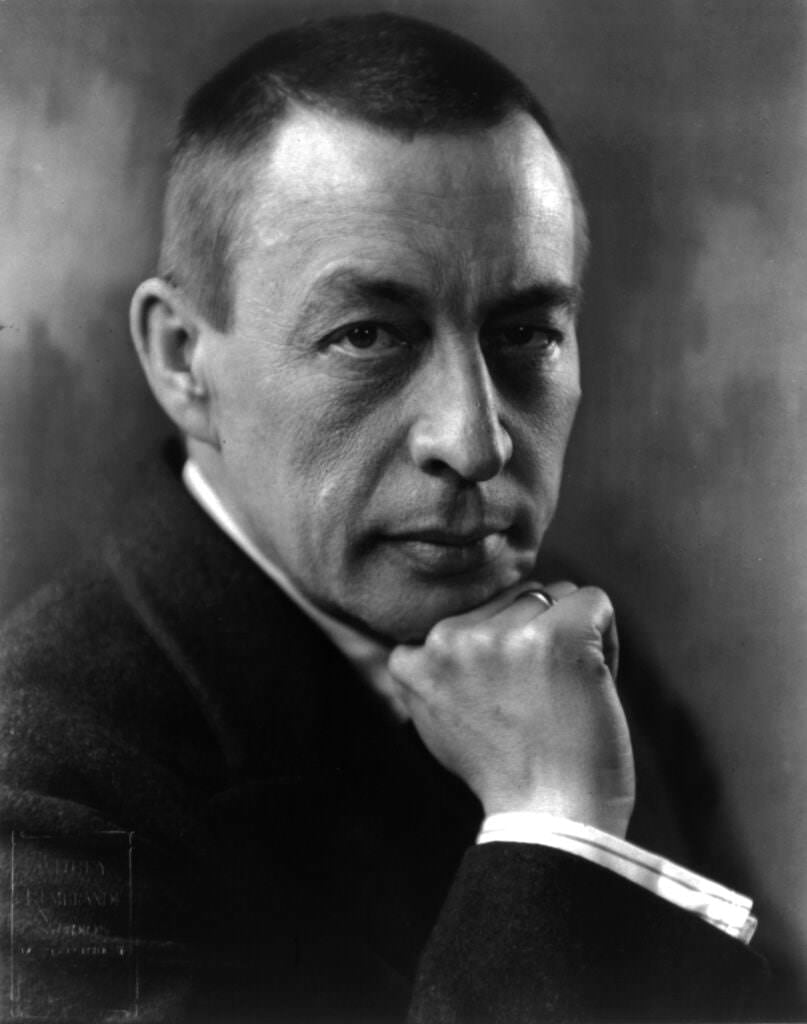
Sergei Rachmaninoff (1873-1943)
Symphony No. 3
39 minutes
Composer: Sergei Rachmaninoff (Born in Semyonovo, Russia, in 1873; died in Beverly Hills, California, USA, in 1943)
Work composed: 1935-1936
World premiere: Premiered on November 6, 1936, by the Philadelphia Orchestra, conducted by Leopold Stokowski
Instrumentation: 2 flutes, piccolo, 2 oboes, English Horn, 2 clarinets, bass clarinet, 2 bassoons, contrabassoon, 4 horns, 3 trumpets, 3 trombones, tuba, timpani, 5 percussion, harp, celesta, and strings
I. Lento – Allegro moderato
II. Adagio ma non troppo
III. Allegro – Allegro vivace – Allegretto – Allegro
By the mid-1930s, Rachmaninoff was an American resident, but his creative heart remained in Russia. Exiled by the Russian Revolution, emotionally uprooted from his homeland, and world-famous as a pianist more than a composer, he spent his final decades drifting between American concert halls and quiet lakeside villas—nostalgic, displaced, yet still creatively restless. Written in 1935–36 at his summer retreat on Lake Lucerne, Switzerland, the Third Symphony is the only one of his symphonic works composed entirely in exile, and its voice is unmistakably one of memory refracted through distance.
The first movement opens in a haze of mystery: a chant-like motto in the lower strings and winds that evokes the liturgical world of Rachmaninoff’s childhood—Orthodox chant, cloistered spaces, candles flickering in half-light. The development seethes with urgency but avoids explosion—emotional energy is controlled, compressed, coiled.
The second movement, Adagio ma non troppo, is a deeply personal paradox. It begins with solo horn and harp, the orchestra hushed and reverent. This is Rachmaninoff the poet—introspective, yearning, romantic but never saccharine. But suddenly, like a dream turning cold, the music shifts into an eerie scherzo: odd-metered, off-balance, and a little grotesque. The movement ends suspended, unresolved, as though retreating into silence rather than concluding.
The finale erupts with rhythmic vitality and brassy defiance. After the introspection of the previous movement, the music now marches with purpose. Rachmaninoff introduces a jagged, dancing theme that feels almost ritualistic Halfway through, a slow, glowing chorale appears, offering a brief glimpse of serenity. But this, too, is fleeting. The movement resumes its propulsion, hurtling toward a coda where the original chant motif from the first movement reemerges—this time grander, more illuminated, as if rising from the past to guide the music home.
Yet Rachmaninoff’s idea of “home” here is complicated. The symphony ends in a blaze of orchestral light, yes, but not in unambiguous triumph. It is a hard-won arrival, marked by clarity rather than comfort.
At its premiere, Symphony No. 3 baffled audiences and critics alike. Many expected the sweeping romanticism of his Second Symphony and heard instead a leaner, more modern voice—one tempered by disillusionment and loss. But today, we recognize the Third as a masterwork of mature introspection: a symphony of geographical and emotional exile. Rachmaninoff was no longer writing from Russia—he was writing about it, to it, in its absence.