Mel Bonis (1858 - 1937)
Suite en forme de valses
15 minutes
Composer: Mel Bonis (Born in Paris, France, in 1858; died in
Sarcelles, France, in 1937)
Work composed: 1898
World premiere: Unknown; likely premiered in private salon
performance in Paris in the early 1900s
Instrumentation: flutes, oboe, 2 clarinets, bassoon, 2 horns,
timpani, and strings
Suite en forme de valses
I. Ballablie
II. Valse Lente
III. Scherzo-valse
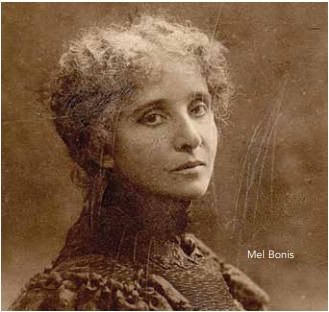
On the title page it reads simply: Mel Bonis. The name, neutral and abbreviated, could easily be mistaken for a man’s. That was the point. In Paris in the late 19th century, a woman composer needed to obscure her identity to be taken seriously.
Wolfgang Amadeus Mozart (1756 - 1791)
Piano Concerto No. 25
31 minutes
Composer: Wolfgang Amadeus Mozart (Born in Salzburg,
Austria, in 1756; died in Vienna, Austria, in 1791)
Work composed: 1786
World premiere: Likely premiered by Mozart himself in
Vienna, December 1786
Instrumentation: Solo piano, flute, 2 oboes, 2 bassoons,
2 horns, 2 trumpets, timpani, and strings
Piano Concerto No. 25 in C major, K.503
I. Allegro maestoso
II. Andante
III. Allegretto
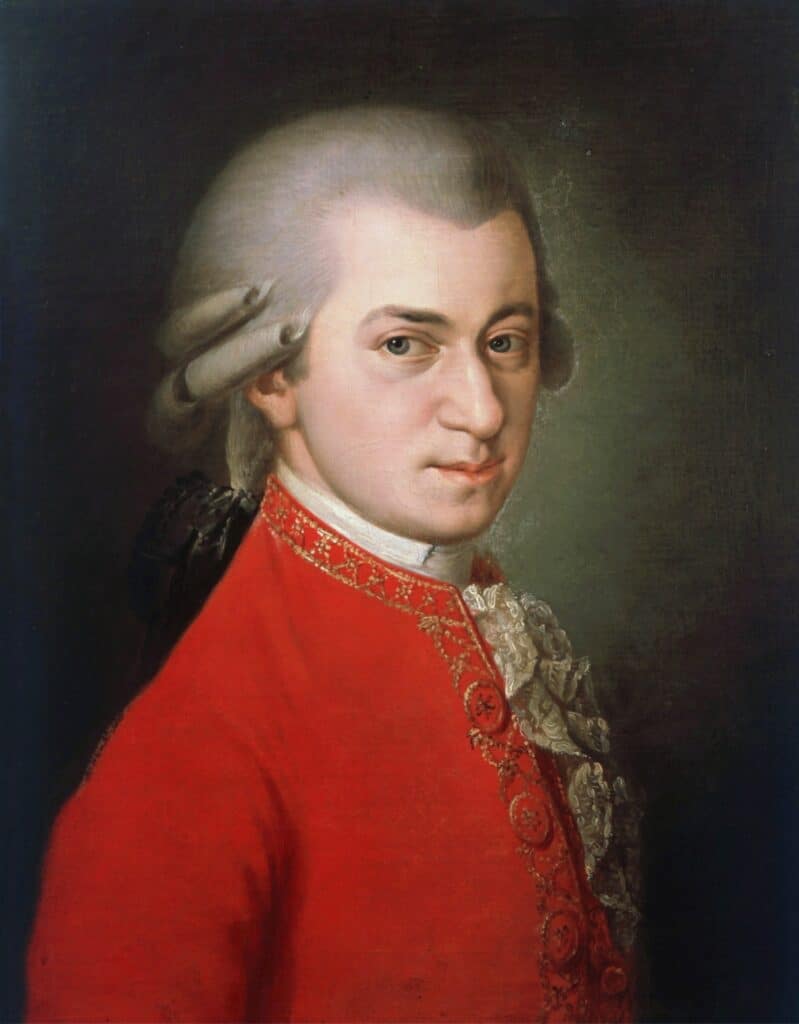
In the winter of 1786, Wolfgang Amadeus Mozart sat at the height of his powers. He had just enjoyed triumphs on the operatic stage with The Marriage of Figaro, and his piano concertos were eagerly awaited by Viennese audiences. Within the span of just a few weeks, he produced two monumental works in C major: the Prague Symphony (No. 38) and the Piano Concerto No. 25, K. 503.
And yet, unlike his Concerto No. 21, which would soon be adored the world over, No. 25 fell into obscurity. Mozart himself played it several times, but after his death it all but vanished from concert programs for nearly a century. It was too grand, perhaps, too symphonic, too forward-looking for audiences accustomed to lighter entertainment. Only in the 20th century did musicians and scholars begin to recognize its stature as one of Mozart’s most majestic achievements. Today it is often ranked alongside his very greatest concertos.
Part of the concerto’s neglect stemmed from its scale. Where many of Mozart’s concertos shimmer with intimacy — elegant dialogues between piano and orchestra — Concerto No. 25 opens with a symphonic breadth. Trumpets and timpani, unusually prominent in Mozart’s concertos, give the first movement a ceremonial grandeur. The opening theme, played by the full orchestra, is almost regal in character: stately dotted rhythms and fanfares that would not be out of place in a coronation. It is Mozart writing not for the salon but for the state.
When the piano enters, it does not simply decorate or dazzle. Instead, the soloist converses with the orchestra as an equal partner, expanding and reflecting on the themes rather than merely displaying virtuosity. Listen for the way the piano sometimes seems to argue with the orchestra, sometimes to plead, sometimes to affirm. The dialogue feels closer to Beethoven than to the gallant tradition Mozart inherited.
The slow movement, Andante, offers a striking contrast. After the grandeur of the first movement, the music turns inward, almost confessional. The orchestra begins with a gentle chorale-like theme, over which the piano enters tenderly, weaving elaborations that feel like arias without words. Here, Mozart the dramatist emerges: this is music of vulnerability and lyricism, reminiscent of the heart-stopping slow movements in Figaro or Don Giovanni. The simplicity of the scoring — mostly winds and strings in dialogue with the piano — only heightens its intimacy.
The finale, Allegretto, restores brightness and wit, though with a grandeur that keeps it tethered to the concerto’s larger architecture. Built on a dance-like rondo theme, it bounces with optimism, filled with comic-opera charm and contrapuntal ingenuity. Midway through, Mozart spins the theme into a fugato, showing off his mastery of counterpoint while keeping the mood playful. By the close, orchestra and soloist join in jubilant affirmation, the pomp of the opening transformed into joy.
It is tempting to hear Concerto No. 25 as Mozart’s “Emperor Concerto” — a title Beethoven’s Fifth would later earn — but perhaps its long neglect says more about history’s blind spots than about the music itself. For decades, audiences sought the intimacy of Mozart’s earlier concertos or the thunder of Beethoven, overlooking this work’s unique blend of majesty and lyricism.
Now, in the concert hall, its power is undeniable. The regal opening, the tender slow movement, the jubilant finale — together they reveal a composer pushing the piano concerto into new territory. What was once overlooked as too serious now gleams as one of Mozart’s supreme achievements.
In rediscovering Concerto No. 25, we not only reclaim a hidden gem, but also witness Mozart’s vision at its most expansive: a piano concerto that is also a symphony, a celebration, and a profoundly human drama.
Georges Bizet (1838 - 1875)
Symphony No. 1
28 minutes
Composer: Georges Bizet (Born in Paris, France, in 1838; died in Bougival, France, in 1875)
Work composed: 1855
World premiere: February 26, 1935, in Basel, Switzerland—80 years after it was written
Instrumentation: 2 flutes, 2 oboes, 2 clarinets, 2 bassoons,
4 horns, 2 trumpets, timpani, and strings
Symphony No. 1 in C Major
I. Allegro vivo
II. Adagio
III. Allegro vivace (scherzo)
IV. Allegro vivace
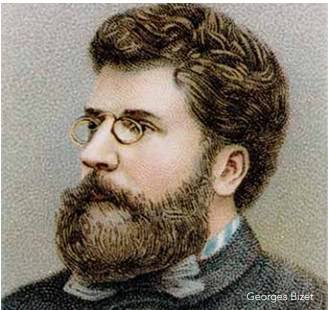
It is one of the great ironies of music history: Georges Bizet, remembered almost entirely for his opera Carmen, wrote a full symphony at the age of 17 that lay unheard for nearly eighty years. Composed in 1855 while he was still a student at the Paris Conservatoire, the Symphony in C major shows astonishing maturity for a teenager. Yet Bizet never sought to publish or perform it. The manuscript sat quietly in the Conservatoire’s library until 1933, when it was rediscovered and promptly hailed as a miracle of youthful genius.
Why Bizet suppressed it remains a mystery. Perhaps he feared the piece was too indebted to his teacher, Charles Gounod, whose own Symphony in D had just made a splash. Perhaps, too, Bizet was simply more focused on winning competitions and carving out a career in opera. Whatever the reason, the neglect deprived audiences for decades of one of the freshest and most exuberant works of 19th-century symphonic music.
The symphony opens with a bright, buoyant Allegro vivo. The violins leap upward with an infectious theme, joined quickly by winds and full orchestra. Already the teenage Bizet reveals a knack for orchestration — strings and winds converse playfully, phrases are trimmed with elegance, and the energy never flags. If Gounod’s influence is palpable, the youthful confidence is Bizet’s own.
The second movement, Adagio, is poised and lyrical, its long singing lines carried first by the oboe over muted strings. The mood is pastoral, but not without depth; there is a serenity here that looks forward to Bizet’s gift for writing unforgettable melodies in Carmen or L’Arlésienne.
In the Scherzo, Allegro vivace, Bizet’s exuberance bursts forth again. Rhythms sparkle, the writing brims with lightness, and the movement races with youthful abandon. Mendelssohn’s spirit hovers in the background, but the wit and clarity feel distinctly French.
The finale, Allegro vivace, gathers all the threads and drives them to a jubilant conclusion. Fugal passages show off Bizet’s Conservatoire training, while the infectious dance rhythms remind us that this was a composer brimming with joie de vivre. The teenage Bizet leaves us breathless, closing his only symphony in a blaze of optimism.
After completing the Symphony in C, Bizet never wrote another symphony. He poured his energies instead into opera and stage music, producing works filled with drama and character but often struggling to find success during his short lifetime. He died at only 36, just months after the disastrous premiere of Carmen — never knowing it would become one of the most performed operas in history.
This makes the Symphony in C all the more poignant. Here is Bizet at 17, brimming with invention, channeling the symphonic tradition with ease, and suggesting a path he would never follow again. We cannot help but wonder what he might have achieved had he returned to the symphony later in life, with his melodic genius and dramatic flair fully matured.
The rediscovery of the Symphony in C in the 1930s was more than an archival triumph; it was the return of a lost masterpiece. What had been hidden in a drawer emerged as one of the most dazzling first symphonies ever written. It remains both a joy and a tantalizing question mark: a glimpse of Bizet’s brilliance in a genre he abandoned, leaving us with the bittersweet thought of what might have been.